Discovery and delivery planning
We turn goals, users, constraints, and existing systems into a delivery plan: product type, milestones, integrations, and what can wait for a later release.

Canberra’s public-sector and defence ecosystem needs web platforms that are accessible, secure, and clear for citizens and stakeholders. Dev House Australia builds custom web applications for government programmes, education providers, and organisations that must meet high expectations for trust and maintainability. From service portals and programme platforms to internal tools, we deliver structured web development with Australian time-zone collaboration and documentation your teams can own.
CLIENTS





Scope
From citizen-facing services to internal programme platforms, we deliver discovery-through-launch web development suited to Canberra’s stakeholder environment.
We turn goals, users, constraints, and existing systems into a delivery plan: product type, milestones, integrations, and what can wait for a later release.
We design journeys that stay clear under real use: navigation, empty states, errors, and the actions that matter for your business.
Role-based products with their own data model, permissions, and workflows, customer tools, operations consoles, and platforms that cannot be a theme.
Customer, partner, and staff portals that replace email, spreadsheets, and disconnected systems with one authenticated place of work.
We connect the product to identity, payments, CRM, ERP, and internal services with clear contracts and observable failures. CRM platform choice and integration architecture sit on the CRM hub.
Component-driven interfaces in React, Angular, or Vue, with accessibility and performance treated as product requirements.
We test the journeys users will hit, check integrations, and release with monitoring so go-live is controlled.
After launch we keep the product current, or move you off a fragile stack without surprising users. If you only need people inside your squad, that is a front-end developers engagement.
Canberra Market
We design for government delivery realities, accessibility, clarity, security, and multi-stakeholder approval cycles.
Accessible service journeys and content platforms that help residents complete tasks with less friction.
Access-controlled portals and collaboration tools with security-conscious architecture patterns.
Internal web tools that improve coordination across teams, vendors, and reporting cycles.
Platforms for programmes, partners, and learners with clear information architecture.
Technological Stack Expertise
Primary delivery is React, Angular, or Vue on the front-end, with Node.js, Java, .NET, Python, PHP, or Go behind the API. Cloud hosting is AWS, Azure, or GCP. See the technology pages for stack depth; this page owns the commercial web build. Mobile and game engines are not this engagement.
Industries
We apply the same delivery model to sector-specific constraints (identity, payments, listings, and operational tools) and link through to the industry pages that already exist on this site.
Customer and internal finance web apps where authentication, auditability, and integration with existing systems matter as much as the interface.
Citizen and staff tools that need clear information architecture, secure sign-in, and a maintainable content and service model.
Patient and clinician web work that treats privacy, consent, and reliable messaging as product requirements, not extras.
Catalogue, checkout, and back-office web tools that stay in step with inventory, payments, and fulfilment.
Search, listing, and investor experiences where speed and listing trust decide whether someone enquires.
Partner portals and operational dashboards so plants and supply-chain teams act on live data instead of static reports.
Product types
A marketing website presents the company. A web application is software people log into and use. A portal sits on your existing operations. We recommend the thinnest product that still owns the workflow. SaaS is one shape of web application, not the default.
Authenticated products with their own rules, data, and release cycle, internal tools, marketplaces, and customer software that has to stay maintainable.
Self-service and B2B access to accounts, documents, orders, or programme status, usually integrated with systems you already run.
REST or GraphQL services, identity, and event flows so the web product is not a shell over unknown back-ends.
Editorial or programme sites when the hard part is workflow, permissions, and integrations, not a theme with plugins.
Phased replacement of slow or brittle web estates, keeping the journeys that work while changing the architecture underneath.
When the same product also needs mobile, desktop, or a wider estate, the commercial home is custom software development.
Tell us about your Canberra programme, service portal, rebuild, or internal platform. We’ll outline scope and next steps in Australian business hours.
Process
The sequence stays the same whether the first release is a portal, a rebuild, or a new application. What changes is how much we map integrations before we write production code.
We capture users, journeys, systems of record, compliance constraints, and whether you need a website, a portal, or a full web application.
We define services, data flows, identity, and third-party boundaries so the product does not invent a second source of truth.
We produce UI for the critical journeys (onboarding, search, checkout, or staff workflows) before the build is locked.
We implement front-end and back-end in iterative releases, with review and CI so contracts stay aligned as integrations land.
QA runs functional, regression, and integration checks, including auth and payment paths, across the browsers your users actually use.
We release to your environment with runbooks, monitoring, and rollback so go-live is controlled.
We stay on for defects, dependency upgrades, and the next slice of the roadmap.
You get regular progress you can inspect, not a black box. If you need engineers inside your team rather than a full product engagement, that is a front-end developers engagement (staffing), not a turnkey build.
Cost
We do not publish a fixed project price. The estimate follows the work: product type, how much design is original, which systems you integrate, and how much you need after launch.
After a short discovery conversation we can outline a first milestone and the factors that would move cost or date. Use the form below or book a call. We will not invent a number before the scope is clear.
Why Choose Us
Canberra buyers need partners who understand accessibility, documentation, and delivery discipline, not rushed builds that create compliance risk later.
We design inclusive interfaces and clear content structures suited to public-facing Canberra services.
Role-based access, sensible integration boundaries, and maintainable code for sensitive programmes.
Milestone demos and written decisions that support multi-team Canberra review cycles.
When content is public, we structure pages so citizens and AI tools can find accurate information quickly.


Reviews & Testimonials
Locations
Serving Canberra and the ACT, delivering nationwide. Explore web development in other Australian cities, or book a call focused on your Canberra project.
Canberra web projects typically range from about AUD $20,000–$50,000 for focused portals, to $80,000–$160,000+ for complex multi-stakeholder platforms. We estimate after discovery.
Yes. Accessibility, clear journeys, and maintainable content models are core to our Canberra public-sector engagements.
Focused builds often take 10–16 weeks. Larger programme platforms with integrations and phased releases commonly take 4–7+ months.
Yes. We can collaborate with existing design, content, and IT vendors, or deliver as a single accountable engineering partner.
Government digital services, defence-adjacent programmes, public-sector operations, and education/research organisations.
Tell us about your project and we will respond from our Sydney team, usually within one to two business days. * indicates a required field.

Suite 5, Plaza 256, Blanchardstown Corporate Park 2, Dublin 15, D15 VE24, Ireland
+353 1 531 4791
Floor 3 East - 3E - 501 5th St - Dubai Int'l Airport, Dubai Airport Free Zone (DAFZA), Dubai, United Arab Emirates
+353 1 531 4791Global Presence
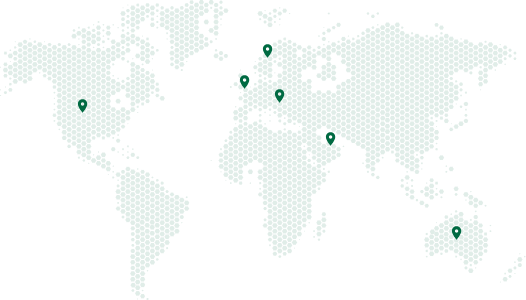
Local leadership. Global engineering excellence. Delivering software solutions across Europe and Asia-Pacific.
Book a call