



RAG and knowledge applications
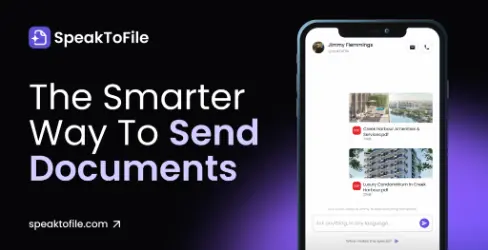
We index approved documents and records, retrieve the passages that matter, and generate answers that cite those sources. That is the same pattern we shipped on SpeakToFile for brochure and policy Q&A.

LLM development here means applications that retrieve from your sources, generate with citations, and run in the systems you already operate, not a model trained from scratch. Dev House Australia scopes the corpus, builds retrieval and the product around it, evaluates answers before scale, and deploys in your cloud with access control you can audit. Delivery is backed by Dev Centre House's 15+ years of global engineering, with collaboration that fits Australian business hours.
Bring the documents or systems the model must use, who is harmed if an answer is wrong, and where the feature has to live. We will outline retrieval, evaluation, and a first milestone, in Australian time zones.
CLIENTS





Scope
This page owns language-model applications: retrieval-augmented generation, grounded answers, evaluation, and production in your environment. The broader AI programme, a conversation channel, or a predictive model live on the sibling pages linked below.
We confirm the workflow, the corpus you can share, the systems of record, and the evaluation bar before we recommend an architecture. If the engagement is a wider AI programme, start on the AI development page.
We index approved documents and records, retrieve the passages that matter, and generate answers that cite those sources. That is the same pattern we shipped on SpeakToFile for brochure and policy Q&A.
We design chunking, embeddings, and search so the model sees the right context, not the whole archive. Vector search is a method inside the application, not a separate product URL.
We connect the model to your APIs, identity, and tools so a feature can read and write in a real workflow. Channel UX, hand-off, and WhatsApp or Teams live on the chatbot page.
We agree success and failure cases up front: groundedness, refusal when the source is missing, latency, and a review path. Prompt-level evaluation can continue on the prompt engineering page.
We treat the corpus as governed: role-aware retrieval, encryption in transit and at rest on the cloud you already use, and logging you can inspect. We do not claim HIPAA, IRAP, or air-gapped private models we have not delivered.
We run the application in your AWS, Azure, or GCP account (typically an Australian region when residency matters) with monitoring, cost visibility, and a rollback. We do not train foundation models in-house.
We stay on for corpus change, retrieval quality, prompt or model-API change, and the next slice of the roadmap. Repeatable workflow automation without a language-model feature belongs on AI automation.
Bring the sources, the users, and the system the feature must talk to. We will talk through RAG, evaluation, and a first milestone, in Australian time zones.
Cloud AI Deployment
We deploy the application, the index, and the model API calls in the cloud account you already operate, with networking, observability, and cost-aware scaling. Australian-region placement is a scoping decision, not a slogan.
Industries
The delivery model is the same: governed sources, citations, and systems you already run. Sector pages below already exist on this site.
Policy, onboarding, and research assistants where every answer should point back to an approved document.
Admin and knowledge tools that treat consent, access, and reliable messaging as product requirements, not a claimed HIPAA programme.
Internal search and drafting over manuals and correspondence, with access control your security team can review.
Catalogue and policy Q&A grounded in the files you publish, not a generic storefront widget.
How it is built
This is the LLM application path. It is not the AI hub’s “which kind of AI” chooser, and it is not a model-training laboratory.
We map what may be indexed, who may see it, and what must never leave the account, including Australian-region hosting when that is a requirement.
Documents are chunked, embedded, and searched so the model is conditioned on passages, not on guesswork.
The model drafts from retrieved context and surfaces sources the user can open. If retrieval is empty, the system should refuse rather than invent.
We score answers against an agreed set: groundedness, coverage, latency, and harmful or off-policy output.
We deploy into your environment with logs, cost, and a path to refresh the index when the corpus changes.
Predictive or visual models belong on machine learning. A bot with channels and hand-off belongs on chatbot development. A programme that has not chosen an approach belongs on AI development.
Technological Stack Expertise
The stack is an application stack: retrieval, the product UI and APIs, foundation-model APIs, and evaluation. We do not list research training methods we do not operate as a product.
 Python
 Node.js
 Angular
 LLaMA
Process
The sequence is discover the corpus, design retrieval, implement the application, then evaluate and operate. We do not open with “train a model.”
We capture the workflow, who may see which sources, what must stay in your account, and the metric that means the feature is useful.
We specify ingest, retrieval, the model API, identity, and where answers are written back, or we say a language model is the wrong spend.
We build connectors, the index, the application, and citation behaviour in your environment, then test retrieval and failure paths.
We run the agreed evaluation set, deploy with monitoring and rollback, and leave documentation your team can operate.
We refresh the index, review misses, and change prompts or model APIs when the corpus or the product changes.
If you still need to choose between an LLM feature, a classical model, automation, or a chatbot, start on AI development. This URL stays the commercial home for the language-model application.
Cost
We do not publish a catalogue price. The estimate follows the corpus, how deep retrieval and integrations go, the evaluation bar, and how much you need after launch.
After a short discovery conversation we can outline a first milestone and the factors that would move cost or date. We will not invent an Australian-dollar figure before the scope is clear.
Why Choose Us
The right LLM partner turns a corpus into software you can operate: grounded answers, an earlier no when retrieval is the wrong spend, and a system a later team can change.
We build retrieval, the product, and the run. We do not claim in-house foundation-model training, RLHF, or proprietary weights.
SpeakToFile is a document assistant with vector search and cited answers. We will not invent project counts or awards to fill this section.
This URL owns LLM applications. AI development owns the programme when the approach is still open. We will send you to the right page.
Collaboration fits Australian business hours. The Australian office is in Sydney. We do not invent extra offices to win a city query.
Reviews & Testimonials
We design and build applications that use a large language model against your sources, typically retrieval-augmented generation, citations, integration, evaluation, and deployment in your cloud. We do not train foundation models from scratch.
Use this page when the job is a language-model application: RAG, retrieval, or generation against governed sources. Use AI development when you still need to choose an approach. Use chatbot development when the product is a conversation channel with hand-off. Use machine learning for predictive or visual models. Use AI automation for workflow and RPA.
Yes. Retrieval-augmented generation and vector search are how we ground answers in your documents. SpeakToFile is the public example: upload files, retrieve passages, and answer with sources. We are not creating a separate RAG URL, that work lives here.
We start with prompting, retrieval, and evaluation. A vendor fine-tune is a discovery option when those cannot meet the metric. We do not sell in-house pre-training, RLHF, or custom foundation models.
Hosting region and which model API you use are scoping decisions. We can deploy the application and index in your cloud account, including an Australian region when residency is required. We will not claim data never leaves a vendor API unless that is designed and agreed.
We retrieve from approved sources, require citations where the product needs them, refuse when retrieval is empty, and measure groundedness on an evaluation set before we call the feature production.
Pricing is an estimate against corpus, retrieval, integrations, evaluation, and support, not a catalogue fee. Discovery is how we make that estimate honest.
Send the workflow, the sources you can share, who may see them, and the system the feature must talk to. Use the contact page or book the call from this page.
Tell us about your project and we will respond from our Sydney team, usually within one to two business days. * indicates a required field.

Suite 5, Plaza 256, Blanchardstown Corporate Park 2, Dublin 15, D15 VE24, Ireland
+353 1 531 4791
Floor 3 East - 3E - 501 5th St - Dubai Int'l Airport, Dubai Airport Free Zone (DAFZA), Dubai, United Arab Emirates
+353 1 531 4791Global Presence
Local leadership. Global engineering excellence. Delivering software solutions across Europe and Asia-Pacific.
Book a call















