Key Takeaways
-
Failure is more than technical issues
Software project failure includes missed business goals, budget blowouts, and unmet needs, not just broken code.
-
Clear goals and priorities matter
Unclear requirements and shifting priorities are major causes of failure, even with skilled developers.
-
Spot risks early
Early warning signs like missed deadlines, scope creep, and low morale should prompt quick action to avoid bigger problems.
-
Iterative planning helps control scope
Short, focused delivery cycles and regular reviews keep requirements under control and reduce costly mistakes.
Software project failure can cost Australian businesses more than an exceeded budget or a missed deadline. When a project delivers the wrong functionality, struggles with changing requirements or fails to support everyday operations, the consequences can affect productivity, customer experience and long-term business growth.
Avoiding costly software development mistakes starts with clearly defined business objectives, realistic budgets and timelines, and effective communication between stakeholders and development teams. By prioritising essential requirements, managing project risks and reviewing progress throughout development, Australian businesses can prevent unnecessary rework, control expenses and deliver software that meets their operational needs.
What Counts as Software Project Failure?
A software project can fail in several distinct ways: the application may never reach production, its delivery may exceed acceptable commitments, or its features may not produce the expected operational value. These outcomes should be assessed separately because finishing every planned feature does not automatically mean the investment succeeded.
Before development begins, agree on business success measures such as reduced processing effort, reliable transaction handling or an improved customer journey, alongside budget, timing and quality constraints. A business case for custom software can connect those measures to the problem being solved and make trade-offs more transparent when unexpected work arises.
Why Software Projects Fail in Australian Businesses
Many projects struggle because different stakeholders expect different outcomes while teams continue accepting new requirements without revisiting the plan. When nobody has authority to choose priorities, seemingly small additions accumulate into scope creep, increasing complexity and making progress difficult to assess.
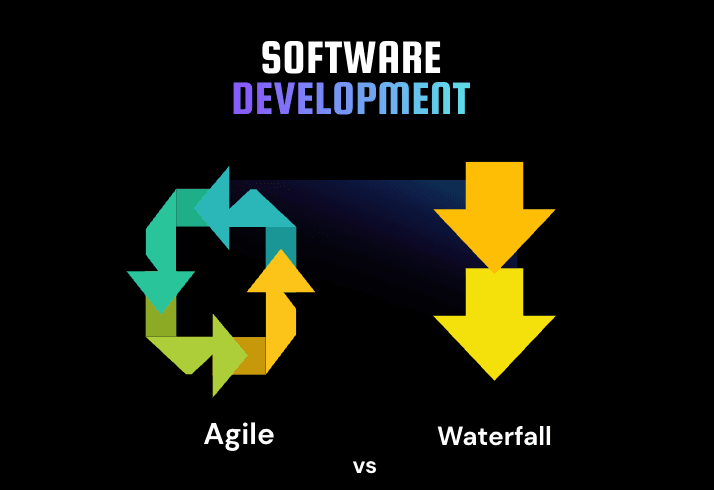
The opposite mistake is specifying every detail long before users can test working software, which can lock a team into assumptions that later prove unsuitable. Iterative delivery offers a more manageable balance: identify essential requirements early, validate ideas in small releases and involve business leaders in decisions that affect scope, funding and timing.

Book a project health check
A short call helps you clarify goals, spot risks and decide your next steps to keep your software project on track.
The Biggest Software Project Risks and Their Warning Signs
The most useful risk assessment links each problem to an observable signal and a response that someone can own. The table below helps sponsors and delivery teams identify software project risks before they become expensive recovery exercises.
| Risk | Early warning sign | Business consequence | Practical response |
|---|---|---|---|
| Unclear objectives | Teams describe success differently | Working features miss the actual need | Agree on outcomes and acceptance criteria |
| Scope creep | Requests arrive without priority decisions | Rising cost and prolonged delivery | Review impact and trade scope consciously |
| Weak ownership | Decisions wait for unavailable stakeholders | Blocked work and inconsistent priorities | Assign an accountable sponsor and product owner |
| Unrealistic estimates | Dates remain fixed after major discoveries | Rushed work and quality compromises | Reforecast remaining effort using evidence |
| Capacity gaps | Specialist tasks repeatedly remain unfinished | Delays and fragile implementation | Review skills, availability and dependencies |
| Integration problems | External systems are tested late | Failed workflows at launch | Validate interfaces and data exchanges early |
| Poor testing | Defects appear only during acceptance | Rework and operational disruption | Test incrementally with realistic scenarios |
A risk register is useful only when people update it and act on the findings, not when it becomes another document to approve. Australian sponsors can use software development cost guidance to examine how changing scope, technical uncertainty and support needs affect a realistic investment plan.
How to Control Requirements Without Overplanning
Requirements management should protect the project's purpose while allowing teams to learn from users and technical evidence. To avoid software development mistakes, agree on the outcomes that must remain stable and treat detailed solutions as hypotheses until they can be tested.
- Define the business problem. Describe the current workflow, its measurable shortcomings and the people affected. Avoid starting with a list of preferred screens before checking whether simpler changes could solve the problem.
- Separate essentials from preferences. Identify capabilities required for a useful initial release, including critical security and integration needs. Record optional enhancements in a backlog rather than quietly expanding the committed scope.
- Expose risky assumptions early. Prototype unfamiliar workflows, test integrations and confirm access to required data before producing a detailed schedule. Small experiments may reveal constraints that cannot be solved merely by adding developers.
- Deliver reviewable increments. Demonstrate working functionality regularly to the people who will use and approve it. Review feedback against agreed acceptance criteria rather than equating every suggestion with a new requirement.
- Control changes openly. For each proposed addition, explain the benefit, extra cost, likely delay and work that could be displaced. The accountable business owner should approve changes affecting delivery commitments.
- Keep documentation proportionate. Maintain decisions, interfaces, non-functional requirements and important business rules where the team can find them. Documentation should make future changes safer without delaying every iteration through unnecessary paperwork.
This approach keeps uncertainty visible without pretending every requirement can be known at the outset. Product discovery before software development is a useful foundation for deciding what to build, what to test first and what not to include.
What Management Should Do When Budgets and Timelines Slip
When forecasts change, management needs to reconsider the remaining work rather than pressure the team to maintain a date that no longer reflects reality. Fixed budgets and unrealistic deadlines become dangerous when leadership treats original estimates as guarantees despite new requirements, technical findings or reduced capacity.
- Re-estimate the remaining work. Use current progress, unresolved defects and known dependencies instead of repeating the initial forecast. Separate work completed from work merely reported as almost finished.
- Protect the most valuable scope. Identify the smallest release that can satisfy the core business need. Remove low-value features rather than cutting essential testing, data protection or operational readiness.
- Examine capacity before hiring. Confirm whether the bottleneck is a missing skill, slow approval, unclear architecture or unavailable business stakeholder. Adding people may not fix a blocked decision or poorly divided task.
- Compare recovery choices. Assess reduced scope, revised milestones, additional resources, temporary pause and stopping the project against the value still achievable. Include contractual and operating consequences where relevant.
- Assign decision ownership. Make it explicit who can approve funding, delivery dates and priority changes. Use a short decision log so stakeholders understand which trade-offs were accepted.
The right response depends on whether the project still offers a defensible return for the remaining investment, not on money already spent. A focused IT Consultancy & Advisory review can help assess technical feasibility and recovery options without automatically recommending more development.
Planning a software project in Australia?
Tell us what you want to build. We’ll help you shape the scope and the next step in a free consultation.
How to Recognise and Recover From a Failing Software Project
A struggling implementation often reveals itself through repeated rework, missed demonstrations, defects that persist across releases and limited participation from intended users. Recognising these signals early makes it easier to distinguish a recoverable planning issue from a failed software implementation that no longer supports the original business case.
- Establish the current state. Review working software, outstanding defects, integrations, actual expenditure and remaining commitments. Ask for evidence from demonstrations and tests rather than relying on percentage-complete estimates alone.
- Recheck business relevance. Confirm that the operational problem still exists and the proposed solution remains worthwhile. A change in business strategy may make some planned functionality unnecessary.
- Identify the dominant constraint. Determine whether the main problem is scope, architecture, unavailable decisions, insufficient expertise or integration complexity. Addressing the wrong constraint can spend more money without changing the outcome.
- Create a realistic recovery plan. Agree on an essential scope, revised estimates, defined responsibilities and measurable acceptance checks. Include a trial release or technical validation where major uncertainty remains.
- Set an explicit decision point. Compare continuing, restructuring, pausing and closing the project using remaining cost, risk and expected benefits. Stopping can be a rational decision when a credible path to value no longer exists.
- Capture transferable lessons. Record which assumptions failed, which controls were ineffective and which governance decisions changed. Apply those lessons to vendor selection, future estimates and implementation planning.
Recovery succeeds only when business sponsors and the technical team agree on what is achievable and how progress will be demonstrated. Applying software testing and QA disciplines to critical workflows can establish whether the revised solution is genuinely ready for use.
How Dev House Australia Supports Reliable Software Delivery
Dev House Australia can assist with project discovery, requirements analysis, architecture review, integrations and Custom Software Development when a tailored application is appropriate. Its teams can help clarify technical dependencies, review delivery feasibility and plan testing that reflects real business processes rather than judging progress solely by feature counts.
If your organisation is assessing a new build or facing delivery difficulties, book a consultation to discuss objectives, unresolved risks, staffing requirements and available recovery approaches. The conversation can help establish which decisions or technical checks should come first before committing additional time or funding.
Conclusion: Preventing Costly Software Project Mistakes
Preventing software project failure requires clear business outcomes, controlled requirements, credible estimates and timely decisions when circumstances change. Early testing, appropriate team capacity and accountable leadership also make it easier to identify risks before they undermine delivery or the value of the finished application.
Australian decision-makers should assess both technical progress and whether the remaining investment still supports the original business need. Discuss your requirements with Dev House Australia to explore how DevOps and release management could strengthen deployment planning, release controls and a realistic path forward.