Key Takeaways
-
Accurate estimation is crucial for project success.
Reliable estimates help in planning resources and managing budgets effectively.
-
Scope definition is foundational.
Clearly defined project scope reduces uncertainty and improves estimation accuracy.
-
Technical complexity impacts estimates.
Understanding the technical aspects of a project is essential for accurate forecasting.
-
Regular updates are necessary.
Estimates should be revisited and refined as the project evolves.
Accurate software development estimation is crucial for Australian businesses aiming to deliver successful projects on time and within budget. Founders, owners, CTOs, product leads, and operations leaders must grasp the intricacies of estimating software projects to avoid pitfalls that can lead to cost overruns and missed deadlines. By carefully assessing factors such as scope, complexity, team effort, and risks, organisations can create realistic estimates that serve as a solid foundation for project planning.
In the realm of software development, estimates are not guarantees but structured forecasts based on available information and assumptions. Early estimates often carry more uncertainty, making it essential to refine and update them as more details emerge during the project lifecycle. A thorough understanding of requirements, technical complexity, and dependencies is vital for crafting reliable estimates. This guide will explore the various elements that contribute to effective software development estimation, equipping Australian businesses with the knowledge needed to make informed decisions before committing to a project.
What is Software Development Estimation?
Software development estimation is a critical process that helps businesses forecast the effort, timeline, budget, and resources needed for a software project. It involves assessing various factors such as project scope, complexity, team composition, dependencies, risks, and testing requirements. Accurate estimation is essential for Australian founders, owners, CTOs, and product leads to make informed decisions before committing to a project.
To create more realistic estimates, it’s vital to start with clear and complete requirements. Vague or incomplete specifications can lead to significant uncertainty in estimates. This includes understanding business goals, user roles, workflows, and acceptance criteria. The more detailed the requirements, the better the estimation will be.
Project scope plays a crucial role in estimation. It encompasses features, workflows, user roles, and integrations, all of which affect the overall effort. Additionally, technical complexity, including architecture and technology stack, must be considered. Each of these elements can significantly influence the development effort and timeline.
Testing and quality assurance should not be treated as optional activities after development. Instead, they should be included in the estimate from the outset. This ensures that the project accounts for the necessary time and resources to deliver a quality product.
Finally, it’s essential to remember that an estimate is not a guarantee. It is a structured forecast based on the information available at a given time. As projects progress and more information becomes available, estimates should be revisited and refined to reflect new insights and changes in scope or requirements. For further insights on how to effectively manage these aspects, consider exploring our IT Consultancy Advisory services.
Defining Scope Before Estimating Development Effort
Before diving into software development estimation, it's crucial to define the project scope accurately. The scope outlines what the project will deliver, including features, user roles, workflows, and integrations. A clear scope helps prevent misunderstandings and sets a solid foundation for estimates.
Start by gathering comprehensive requirements. Engage stakeholders to understand business goals, user needs, and technical constraints. This involves defining user roles and workflows, which are essential for identifying the necessary features. Vague or incomplete requirements lead to uncertainty in estimation, resulting in either under- or overestimating the effort involved.
Next, assess the functional and technical complexity. Functional complexity encompasses business rules, workflows, and reporting requirements, while technical complexity involves the technology stack, architecture, and third-party dependencies. For instance, if your project requires integrations with existing systems or APIs, this can significantly impact the development effort.
Consider the data-related aspects, such as data migration and cleansing, which can add to the overall effort. User experience (UX) and interface design also play a role; the more intricate the user flows and designs, the higher the estimation for frontend development.
Incorporate testing and quality assurance into your estimates. Testing should not be an afterthought; it needs to be part of the development process to ensure a reliable product. This includes functional, integration, and user acceptance testing.
Finally, document all assumptions and risks associated with the project. This transparency allows for better decision-making and helps manage expectations. By clearly defining the scope and understanding the complexities involved, you can create more realistic estimates that reflect the true effort, timeline, and budget needed for successful project delivery.
Factors Affecting Software Development Costs
Estimating software development costs accurately requires a comprehensive understanding of various factors that influence project scope and complexity. This process is not just about crunching numbers; it involves a detailed assessment of multiple elements that contribute to the overall effort, timeline, and budget.
One of the primary considerations is the quality of requirements. Clear and complete requirements form the foundation of any reliable estimate. Vague or incomplete specifications can lead to significant estimation uncertainty. It's essential to articulate business goals, user roles, workflows, and acceptance criteria to create a solid base for estimation.
Project scope is another critical factor. The features, workflows, and integrations you plan to implement will directly affect the effort required. Each additional feature or integration increases complexity and, consequently, the estimated effort.
Technical complexity also plays a vital role. Decisions regarding architecture, technology stack, and third-party dependencies can significantly impact development time and costs. For instance, integrating with external APIs or legacy systems may require additional effort for data migration and validation.
Testing and quality assurance must be included in the estimate from the outset. Often, businesses overlook the time and resources needed for thorough testing, which can lead to oversights and increased costs later in the project.
Lastly, it's crucial to document assumptions and dependencies clearly. Understanding how these factors interact can help refine estimates as more information becomes available, reducing uncertainty and improving decision-making. By considering these elements, Australian businesses can develop more realistic estimates for their software projects, ultimately leading to better project outcomes.
How Technical Complexity Changes the Estimate
When estimating software development projects, technical complexity plays a critical role in determining the overall effort, timeline, and budget. Understanding the various aspects of technical complexity can help Australian businesses create more accurate estimates.
One significant factor is the architecture and technology stack chosen for the project. Different architectures can lead to varying levels of complexity, impacting development time and resource allocation. For instance, a microservices architecture may offer scalability but requires more effort in terms of deployment and integration compared to a monolithic approach.
Integrations with third-party services, such as payment gateways or customer relationship management (CRM) systems, also add layers of complexity. Each integration introduces dependencies that need to be managed, which can affect the delivery timeline. Additionally, the quality and availability of APIs can influence how smoothly these integrations proceed.
Data migration is another area that can complicate estimates. The effort involved in data mapping, cleansing, and validation can vary significantly depending on the volume and quality of the existing data. If businesses have legacy systems, a thorough assessment may be necessary to understand the intricacies involved in migrating data to new platforms.
User experience (UX) and interface design efforts must also be factored in. Creating intuitive user flows and wireframes, while ensuring accessibility, adds to the overall project complexity. The iterative nature of UX design means that feedback can lead to changes in scope, further complicating the estimation process.
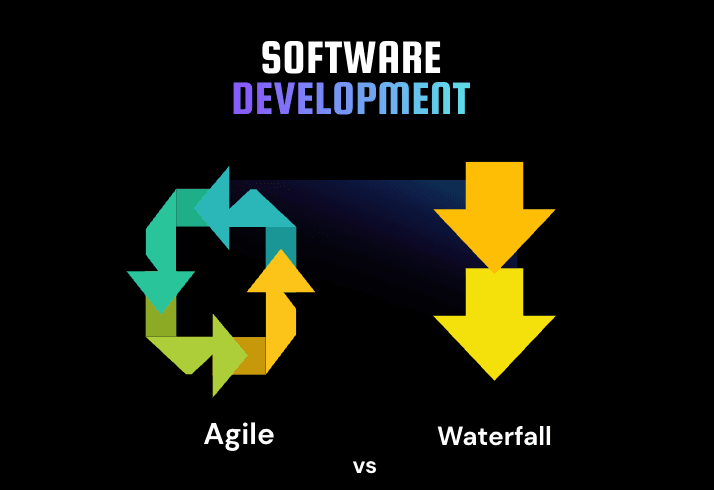
For a deeper understanding of how to manage these complexities, consider exploring the differences between Agile and Waterfall methodologies, which can significantly influence estimation approaches and project management strategies.
Accounting for Testing, Integrations and Deployment
Estimating software development accurately requires a comprehensive understanding of several factors that can influence the overall effort and timeline. One crucial aspect is accounting for testing, integrations, and deployment, which are often underestimated in initial estimates.
Testing is an integral part of the software development lifecycle and should not be treated as an afterthought. It encompasses various types, including functional testing, integration testing, and user acceptance testing. Each of these testing phases requires dedicated time and resources, which should be factored into the overall estimate. Ignoring testing can lead to significant delays and increased costs later in the project.
Integrations also play a vital role in software development estimation. When applications need to connect with APIs, payment gateways, or other third-party systems, the complexity can increase considerably. Each integration point introduces potential risks and additional work, from mapping data to ensuring security protocols are in place. Estimating the effort for these integrations accurately is essential to avoid surprises during implementation.
Deployment is another area that impacts estimates. Setting up environments, configuring infrastructure, and ensuring that the software is ready for production requires careful planning. This includes considerations for continuous integration and delivery (CI/CD) practices, which can streamline the deployment process but also require upfront investment in time and resources.
To create reliable estimates, it is essential to document assumptions and clearly outline the scope of testing, integrations, and deployment efforts. By doing so, businesses can better manage expectations and reduce the risk of project overruns. For a deeper exploration of the software development process in Australia, refer to our guide on A Complete Guide To Software Development In Australia.
Why Software Estimates Change During a Project
Creating accurate software development estimation is vital for Australian businesses aiming to manage their projects effectively. A reliable estimate begins with a clear understanding of the project scope, which encompasses not only the features to be developed but also the user roles, workflows, and administrative capabilities involved. This clarity helps in defining the requirements that are essential for the project.
When requirements are vague or incomplete, the estimation process becomes fraught with uncertainty. It's crucial to avoid false precision; a precise estimate based on unclear requirements can lead to significant issues down the line. Instead, focus on gathering comprehensive information about the business goals, user needs, and any technical constraints that may impact the project.
Technical complexity plays a significant role in estimation. Factors such as the architecture, technology stack, and third-party integrations can dramatically affect the effort required. For instance, if a project involves connecting to various APIs or external platforms, the integration complexity must be factored into the estimate. Similarly, data migration efforts, including mapping and cleansing, should not be overlooked, as they can add substantial time and resources to the project.
Moreover, testing and quality assurance should be integral to the estimation process. Many organisations treat testing as an afterthought, but including it in the initial estimate ensures that quality is maintained throughout development. This consideration also helps in managing the overall timeline and budget, as testing can uncover issues that may require additional resources or time to resolve.
Ultimately, an effective estimation process is iterative. As more information becomes available through discovery and requirements analysis, estimates should be revisited and refined. This flexibility allows businesses to adapt to changes and uncertainties, ensuring that the final project delivery aligns closely with the initial vision.
How Dev House Australia Supports Software Development Estimation
Dev House Australia supports Australian businesses in creating more realistic software estimates by assessing requirements, project scope, technical complexity, integrations, data migration, user experience, testing, infrastructure, and deployment needs before development begins. This can include requirements analysis, architecture review, technical discovery, integration assessment, and identification of assumptions or dependencies that may affect effort, timeline, and budget.
For projects involving legacy systems, complex integrations, unfamiliar technologies, or uncertain requirements, Dev House Australia can also support proof-of-concept work, phased planning, risk assessment, testing estimates, infrastructure planning, and re-estimation as project information becomes clearer. The goal is to reduce uncertainty early and give decision-makers a more transparent basis for planning scope, resources, delivery expectations, and future changes.
Conclusion
Accurate software development estimation depends on more than counting features or assigning hours to development tasks. Requirements, architecture, integrations, data migration, testing, deployment, team capability, dependencies, and project risks all influence the effort and timeline required to deliver reliable software.
For Australian businesses, the strongest estimates are transparent about assumptions, exclusions, uncertainty, and factors that may require re-estimation. Treating estimation as an iterative process allows organisations to refine their forecasts as requirements and technical details become clearer, leading to better planning and more informed project decisions.